Coin Values Moving with Precious Metals: Up-Dated 9/14/2026: Gold $4326 | Silver $63.61
1927 Nickel Value
A detail examine of the coin determines an accurate 1927 nickel value. Defined steps illustrate the features used to identify a semi-clear date. Note on the chart; the mint producing the coin becomes a variety of 1927 Buffalo nickels with a separate value listing. Also note the chart shows a steady rise in value depending on the different stages of condition. Comparing your coin to grading examples narrows its condition range. These facts are key to how much a coin is worth.
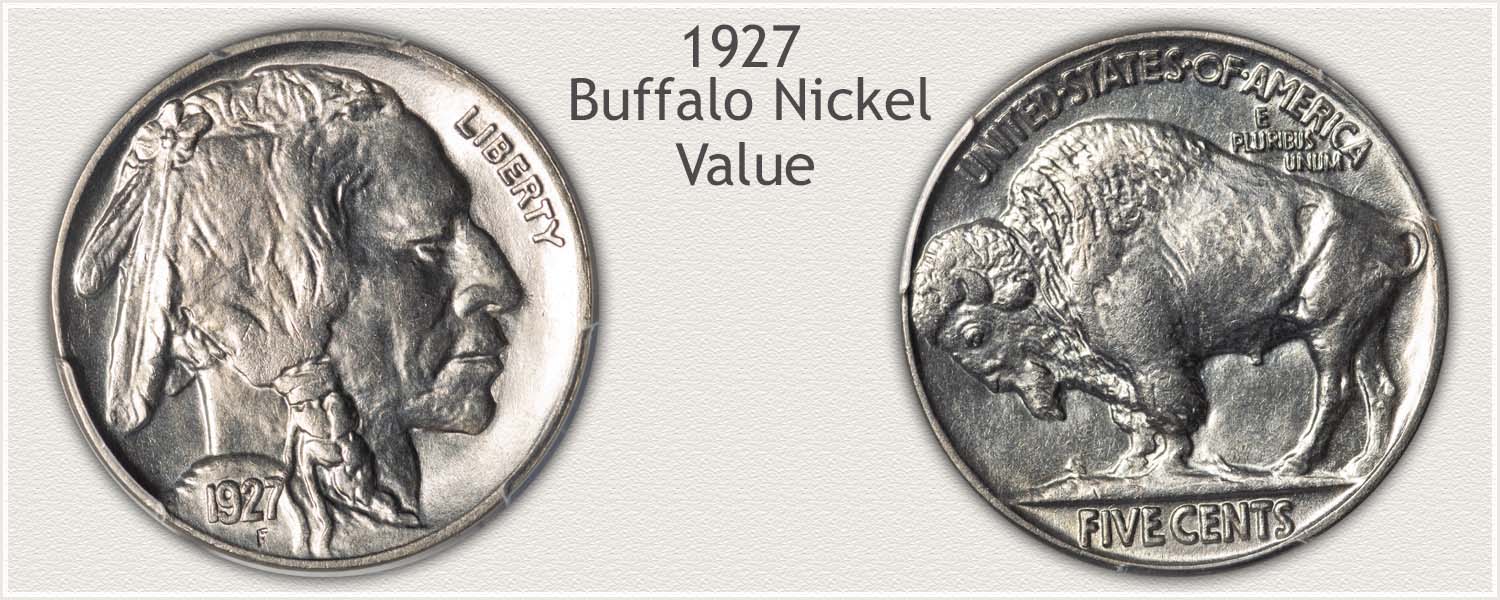 (fig. 1) 1927 Buffalo Nickel Obverse and Reverse Views
| 1927 Nickel Value | ||||
|---|---|---|---|---|
| Condition of Coin | ||||
| Date | Good | Fine | Extremely Fine |
Mint State |
| 1927 Nickel Value Updated | 2026 | |||
| 1927 | $1.37 | $2.17 | $9 | $42 |
| 1927 D | $2.38 | $9 | $68 | $203 |
| 1927 S | $2.26 | $7 | $73 | $1,365 |
There is a demand for these old nickels. The chart represents wholesale Buffalo nickel values. Computed from dealer's price lists with various markup factors figured in.
Steps Leading to Value:
- Step 1: Date and Mint Variety Identified: Images and specific features recognize date and mint with accuracy and narrow value range.
- Step 2: Grading Condition: With a close inspection of the surface, compare to "grading" images and find a close match.
- Step 3: Special Qualities: Certain coins and their condition require added expertise when determining an accurate value.
Step 1: | Date and Mintmarks Confirmed
Relying on an accurate reading of the date starts the value process. This key information identifies a popular and somewhat scarce year of the Buffalo nickel series. Now start an inspection, finding either an easily recognizable date or a faded partial date.
Inspect the lower rim. On the Indian's shoulder, find the date as small digits. Of note, all Buffalo nickels were minted in the 1900s. The first two digits are the number one and nine.
Record the date if clear. Should the date seem partially recognizable, the following section uses distinct features identifying the numbers.
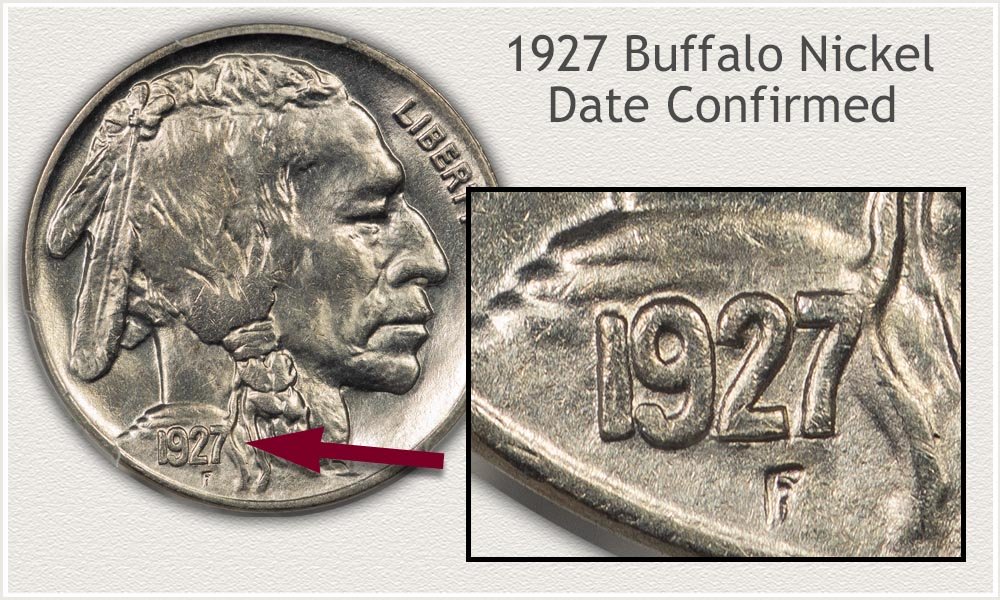 (fig. 2) Date Location and Close Up of a 1927 Buffalo Nickel
How to Recognize the Partial Date 1927 Buffalo Nickel
Wear affecting the clarity of the date became an issue with the Buffalo nickel series. The location on a high relief area plus extensive use caused early fading of digits. This faded condition leaves many coins hard to determine their date.
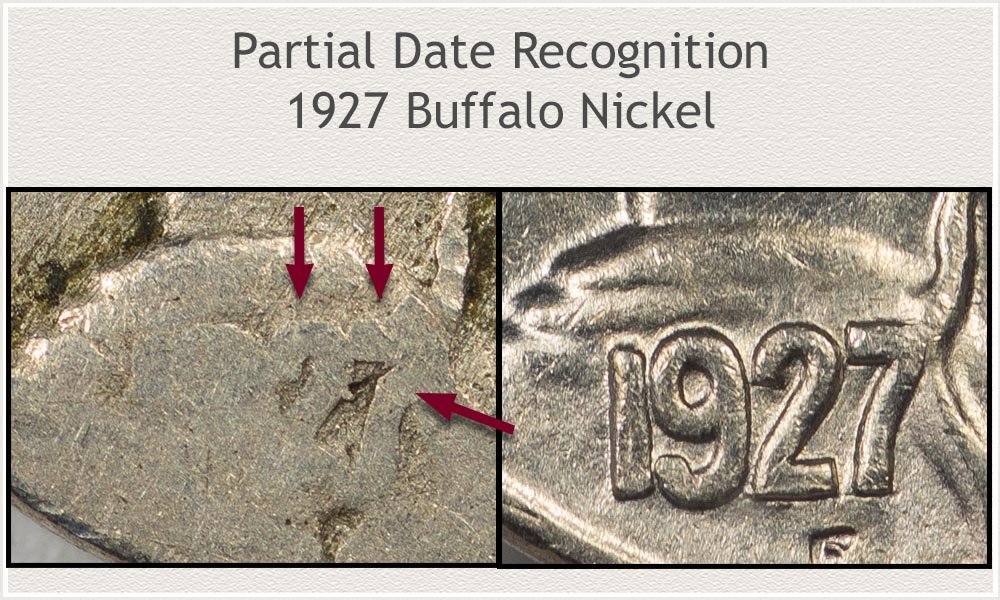 (fig. 3) Use the Features to Identify a Partial Faded Date 1927 Buffalo Nickel
The above image (fig. 3) illustrates a partial date compared to the fully defined date. Focus on the clear date's curved and straight line features. Compare the distinctions of these lines as they appear on the faint, partial date.
Starting with the two, a curved top edge is next to the straight top edge of the seven. Note the sharp angle between these top edges. The right edge of the two curves inward ending with a triangle forming the base of a two.
Defining the "7" of the date, its inner left side forms an inward triangle, with a horizontal and vertical line. Although the right side of the seven is missing, the distinct left edge defines the number.
Lighting the coin with a single source helps define faint and low relief details of the numbers. Inspect the date from different angles and lower and raise the angle of the light source. Lighting combined with distinct features of the two and seven adds assurance of an accurate date.
The Abundant and Scarce Mintmark Varieties of 1927
As noted on the above value chart, three different entries show a wide range in values. These different values represent the production of nickels at three mints. Nickels were struck at the Philadelphia, San Francisco, and Denver mints. Used identify a mint's production, a small letter mintmark was placed on their coinage.
Philadelphia, the main mint, did not use a mintmark. However, San Francisco used a letter "S" and the Denver mint used a letter "D." To identify the mint striking the coin, locate mintmarks along the lower rim. Under FIVE CENTS mintmarks were placed just above the edge of the rim.
The Popular "S" Mintmark Nickel
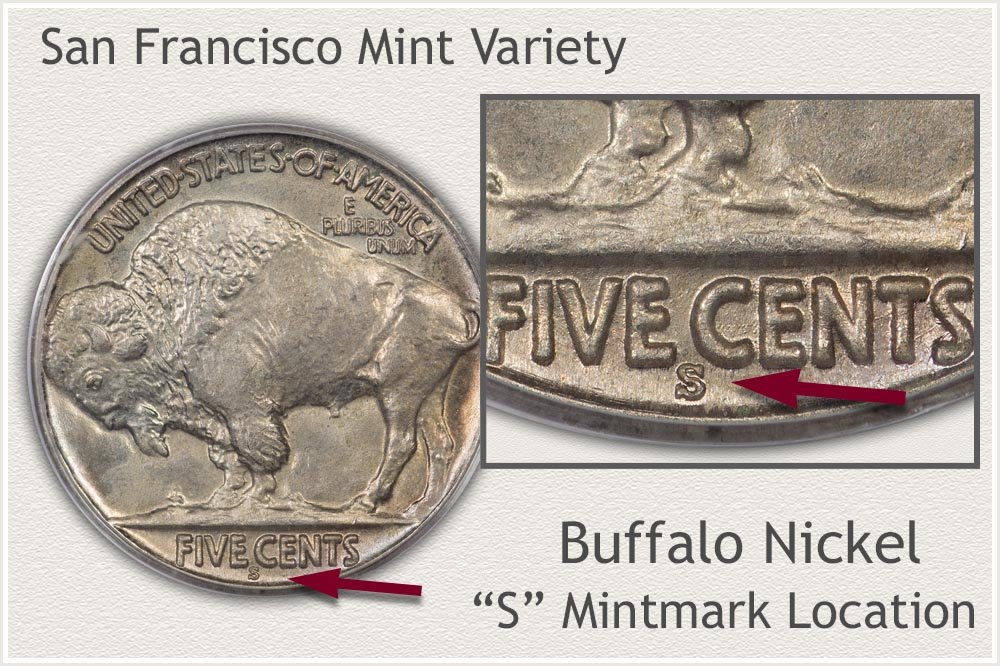 (fig. 4) Identify the S Mintmark on the Reverse of a Buffalo Nickel
The San Francisco 1927 nickel now has a long history of premium values. In 2010 the CoinStudy wholesale value chart lists the 1927-S as $1.25 | $3.55 | $57.42 | $355.88 in grades Good through Mint State. By contrast, the 1937 nickel, at the time listed as $0.49 | $0.98 | $2.28 | $12.35 in grades Good through Mint State. This 1927-S variety still trades in the market above the more common 1937 year and mint combinations. The above chart shows the coin's steady increase in value over time.
With its low mintage of 3,430,000 pieces and historical value performance, this coin is a favorite of collectors. A nice coin, continue with grading its condition to narrow how much it's worth.
"D" Mintmark Nickel
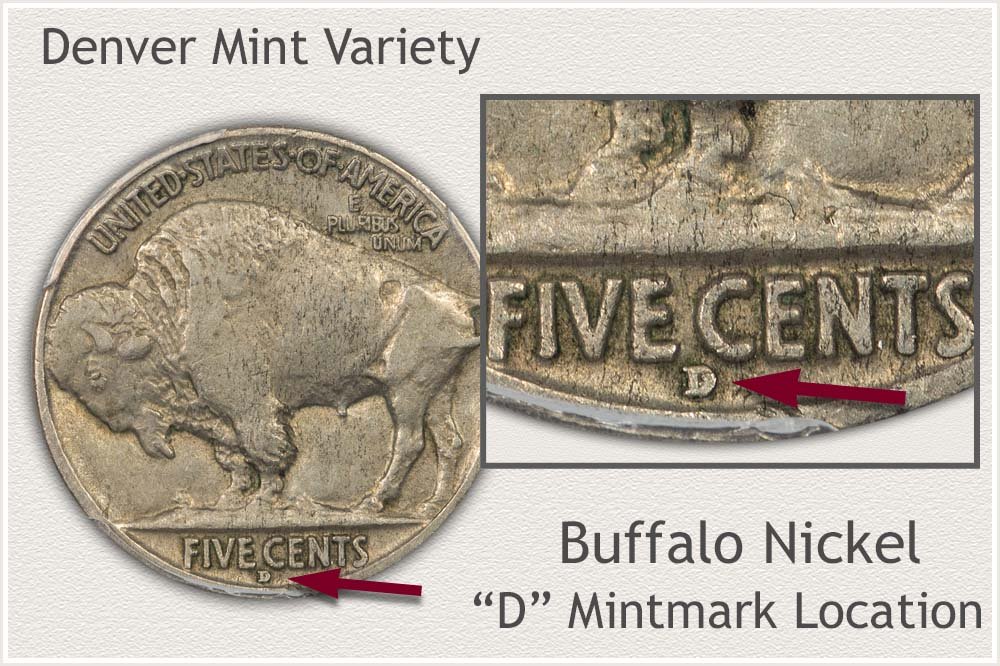 (fig. 5) Location and Close View of the D Mintmark Buffalo Nickel
A 1927 Denver mint nickel attracts premium values in above average condition. This variety was minted in low quantities, the seventh lowest Denver mint coin of the series. Recording 5,730,000 produced, the Denver mint issued a now infrequently found example of this year's Buffalo nickel. An important coin to verify its mintmark and continue with grading its condition.
Collectors of all levels search for pleasing quality nickels when considering adding an example to their collection. Because of scarcity, pieces with sharp detail within the hair and feathers enjoy strong demand. Condition is now an important factor in the coin's final value. First confirm the D mintmark. Next, Step 2, Grading condition, determines where on the value chart to reference a close range.
"No" Mintmark Nickel
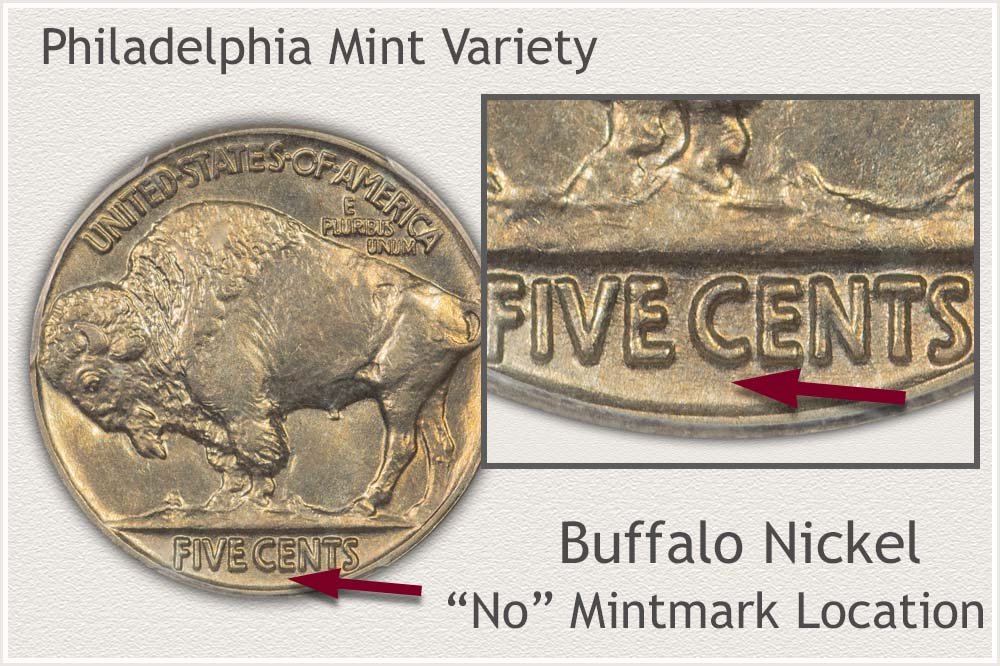 (fig. 6) No Mintmark on Reverse Identifies the Philadelphia Mint Buffalo Nickel
Compared to branch mint production, Philadelphia coined a large amount of nickels in 1927. The mint recorded its mintage at 37.9 million nickels. As a result of this number, many examples of its initial production remain within the coin hobby today. Consider this variety of 1927 nickels ranked as "Available" on a rarity scale.
Note on the value chart: the premium rise starting at the Extremely Fine grade. This gives an indication the quality of most remaining is in moderate to heavily worn condition. Grading condition now becomes the important factor to a narrow value range.
Two key facts are now known. The coin's date and the mint of issue. These plus results of grading condition in the next step form a full description of the coin.
Step 2: | Judging Condition and Determine a Grade
As the above chart shows, condition of the coin determines its narrow value range. Within the market, "grades" define these different levels of a coin's condition. Start with a comparison of your coin and find a close match to a grade image below.
Closely inspect and compare the amount of visible detail on the coin's surface. Referring to the descriptions of a grade's quality, judge the specific features used to measure condition.
At first, subtle details are difficult to recognize. Using a single light helps: it casts strong shadows across the surface. Also, tilt the coin at different angles under the light. With a couple of comparisons with the example image, faint detail often becomes recognizable.
Mint State Grade
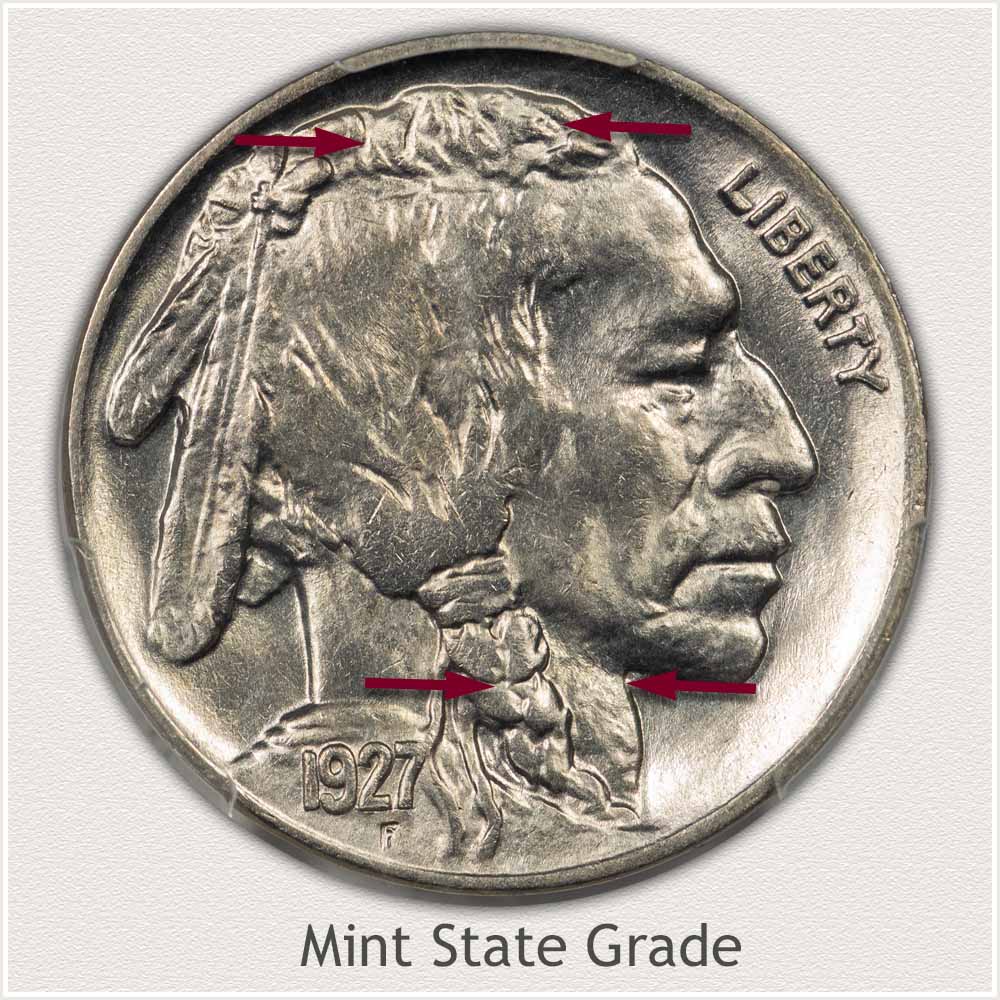 (fig. 7) Highlighted Grading Areas on a Mint State Buffalo Nickel
Mint State condition Buffalo nickels are the highest quality coins. As a definition, these coins show no evidence of wear on their surface. A complete luster shines across their surface when viewed under a light.
Grading a coin identifies the absence of wear starting with high relief points. Viewing the example (fig. 7), luster remains on high points and lower relief areas. Any wear starts to dull and smooth the metal, typically starting on high ridges and contours.
Examine the hair braid in the illustration. This coin is a professionally graded Mint State nickel. Use a comparison of the high contours of the braids and compare them to the shine and texture of the neck area just below. A similar luster and metal texture on both identifies the "no wear" condition.
This same technique when viewing hair detail shows similarity among the strands. Scanning above the part line. High ridge hair strands show a similar appearance as the deeper recesses within the strands. When tilting your coin under a light, the changing angle highlights high and then low areas. When both high and low match with similar brilliance, this identifies the "no wear" condition.
Using the comparison technique, examine high and low relief feather detail. High point feather edges show no signs of flattened, smooth metal at the Mint State grade. Confirm luster remains on both the feather's central shaft and all edges. Typically, the feather edge meeting the hair indicates the worn condition first.
Confirm an overall glow radiates from the surface of your nickel, helping judge this high quality.
Extremely Fine Grade
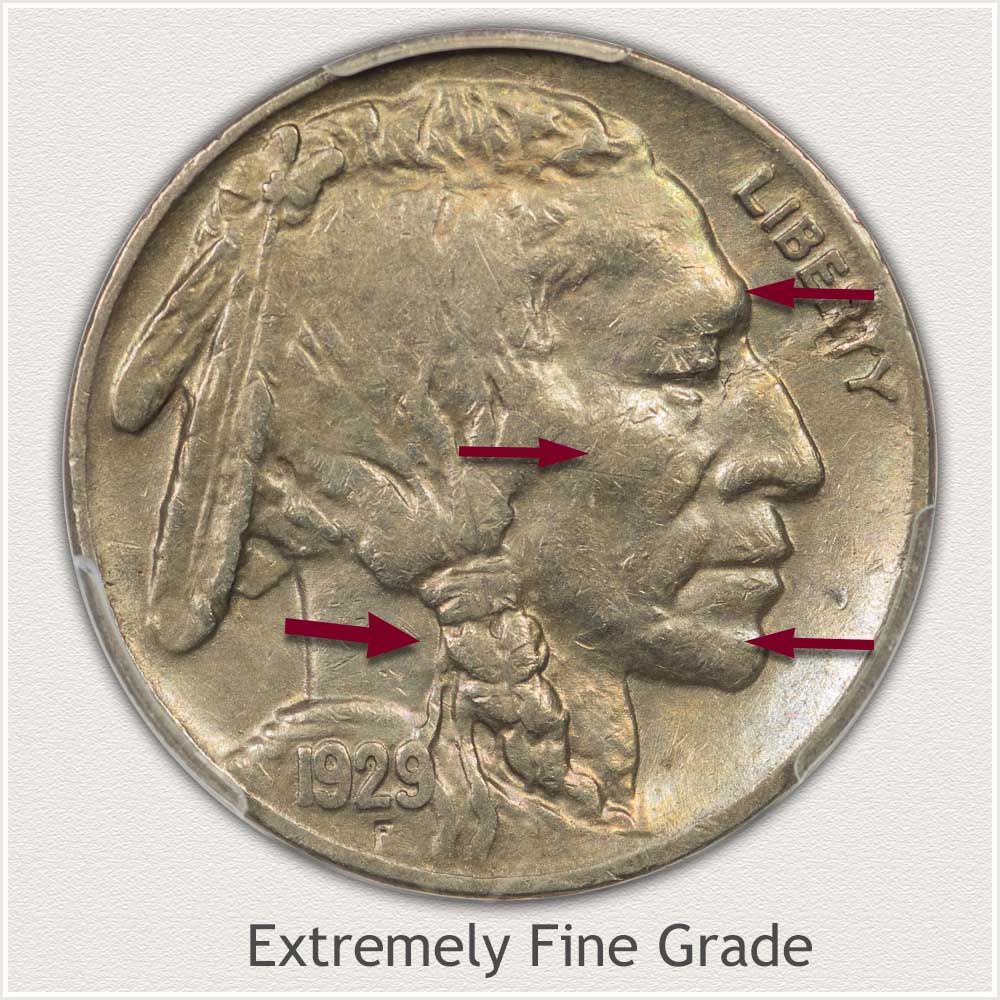 (fig. 8) Condition of Highlighted Features Indicate the Extremely Fine Grade Buffalo Nickel
An overall view of an Extremely Fine condition Buffalo nickel displays fine details with only a few worn areas. Light wear on high contours defines the grade. The abundance of small details, lack of flattened surfaces, and pleasing color, give the impression of high quality. Examination of key features verifies the amount of remaining detail. Illustrated (fig. 8) displays the detail required to meet this light wear standard.
Using the image as a comparison, view the Indian's facial features of your coin. Examine for wear across the eyebrow. A slight area of smooth metal barely flattens the brow's top contour on the example. The second facial feature, the lower line of the jaw, also has only minor evidence of worn and flattened metal. Helping identify the grade, between these two high points, a bold cheek area remains well rounded. Bold with hard to detect flat areas describes the condition of the eyebrow, jaw, and cheek.
In the lower central area, the hair braid remains highly contoured. High points of the braids are fully separated by deep recesses. A comparison of your coin must confirm these deep recesses. Braids showing flattened top contours is the typical visual appearance. This combination of flat braids and remaining deep divisions measures the level of wear.
With these areas examined, now finish with judging the coin's overall impression. Confirm the impression of extensive fine detail with only slight areas of wear. Beginning at the feathers, through the hair and date, the entire coin shows nice features boldly visible.
Fine Grade
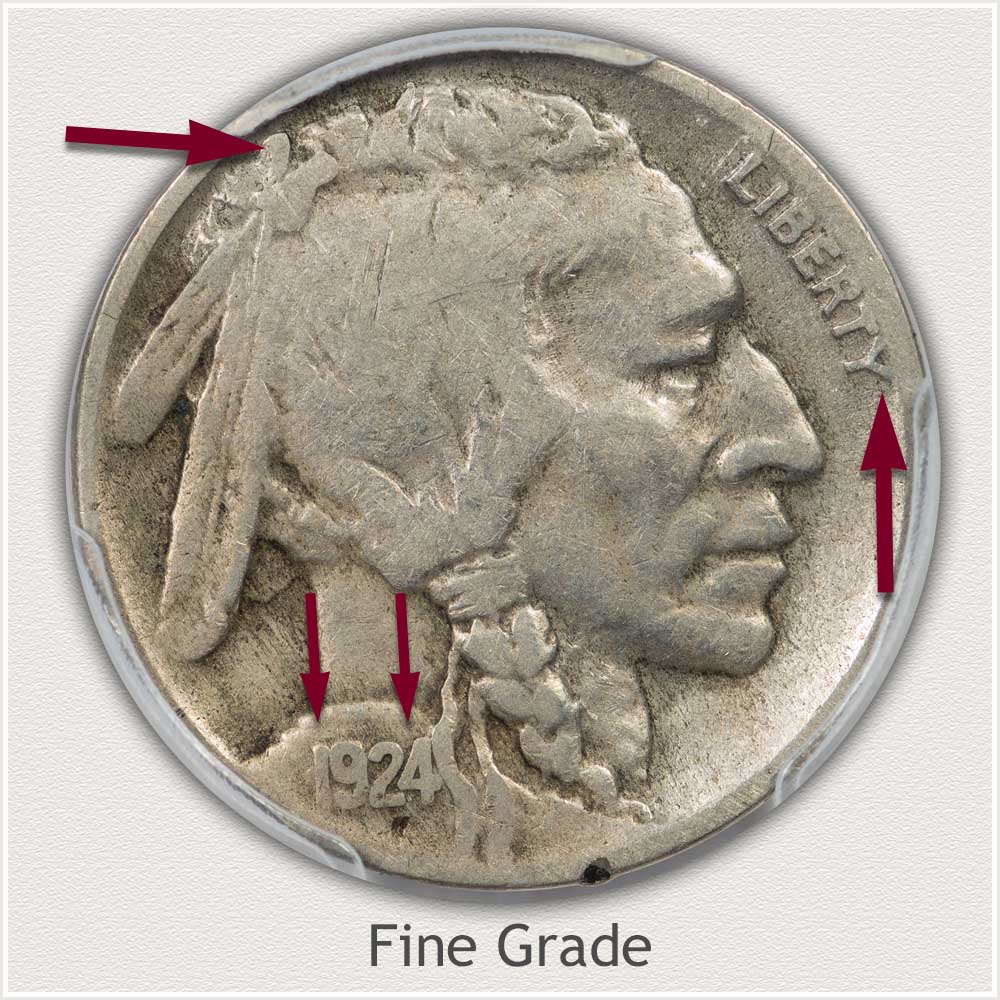 (fig. 9) Compare the Grading Focal Points Identifying the Fine Grade Buffalo Nickel
Grading effectively often requires taking a moment to examine the overall condition of a coin. Viewing the Fine grade nickel illustrated (fig. 9), specifically notice the clarity of small details. Ignore the worn, flattened areas for now. Scanning from the top to bottom of the coin, finely detailed elements remain visible throughout. Clarity of highlighted features gives the coin an appearance of only moderate wear. Clear details offset the presence of worn areas. This describes the general "look" of the Fine grade.
Compare your coin to the detail displayed at the top of the Indian's head. Within the example, individual hair strands remain defined. Recesses separate major hair strands. Wear does show across the top contours; however, there is no widespread merging of strands. Matching this level of detail points to the moderate wear Fine condition.
Secondly, in front of the Indian, letters of LIBERTY remain clear. The example meets this first requirement of readable lettering. The subtle grading point requires the majority of the tops of letters remain separate from the inner edge of the rim. Compare the visible letter detail of your coin with the clarity and letter completeness as illustrated.
Using the clarity and completeness metric, examine the date and its surrounding area. To fit safely into the Fine grade category, all numbers remain visibly clear. A slight merging of the last number with the trailing ribbon indicates the Fine grade. Also, a slight fading of "19" indicates the Fine condition. As a grading point, the date remains easily recognized and defined.
These separate areas with their visible details give the coin a pleasing appearance. These subtle qualities grade the coin within the Fine grade range.
Good Grade
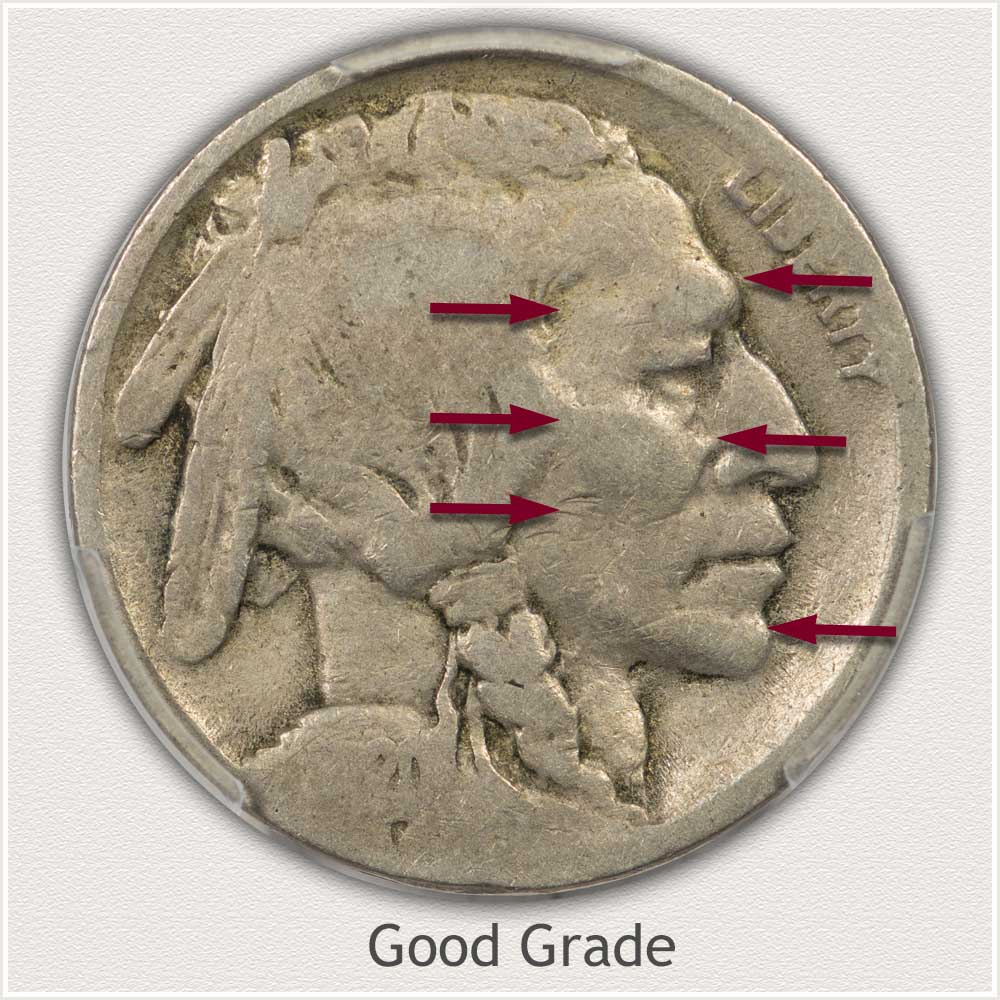 (fig. 10) Required Visual Features Highlighted on a Good Grade Buffalo Nickel
Good condition 1927 nickels are within the collectible range. These coins display a defined amount of detail with an abundant amount of flattened and worn features. Heavy wear with some detail visible defines the grade. It is the clarity of visible detail that decides the grade.
First quality needed for the grade is strong facial features. Overall, the example image (fig. 10) shows many high and low facial contours. Importantly, visual metrics grade these features. Examine the height of the Indian's eyebrow compared to the temple area. A low relief area defines the temple from the higher profile brow. Just below the temple starts the rise to a high relief cheek. This complete separation of eyebrow and cheek remains, identifying the grade. When flatness forms a connection with the eyebrow and cheek, this identifies a lower condition level.
Next, notice in the example a complete lower relief separating the cheek from the jaw below. Again, no flatness connects the two. Staring with the flat area of the cheek, scan near the hairline. Any flatness on the cheek ends before the hairline. This lower area remains distinct before rising up to the flattened area along the jaw. Eyebrow, cheek, and jaw show visible strong profiles.
Despite the definition of heavy wear, Good grade Buffalo nickels display a pleasing quality.
How to Video: Grading Buffalo Nickels
Rated as uncommon are the better quality 1927 nickels. Review the extended grading guide helping recognizing key condition features. A comparison method finds the uncommon condition coins.
Grading Buffalo Nickels | Visual Grading Guides
Step 3: | Special Qualities: Accuracy When Grading Large Value Spans
The above value chart highlights a special quality found throughout the Buffalo nickel series. Note the dramatic rise in value for the 1927-S from Extremely Fine to Mint State grade. This value change depends on detecting a coin without wear from one in lightly worn condition. Judging this small difference in surface quality requires a high degree of accuracy.
Within the coin market, Coin Grading Services provide a professional level of expertise evaluating coins. They authenticate, inspect for alterations, and grade all levels and series of coins. The coin is next encapsulated, giving it future protection (fig. 11).
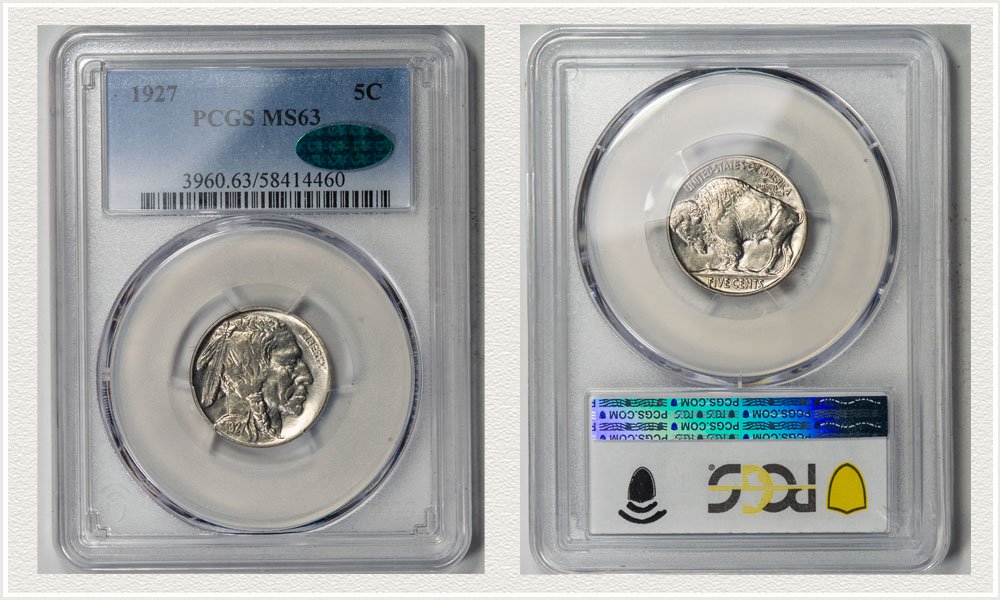 (fig. 11) Buffalo Nickel in a Professional Coin Grading Service (PCGS) Holder
The 1927-S nickel is a perfect example demonstrating the positives of submitting to a grading service. With a professionally evaluated grade you now know the correct level of condition when referencing the chart. Additionally, because of market acceptance, these "graded" coins trade easily within the coin hobby and market.
Review the article: Coin Grading Services. Note: the fee for these services becomes minor when determining the final value of the coin.
With the data collected, an accurate date, confirmed mintmark, and condition review the articles below. These lead to the full Buffalo nickel value chart and a deeper understanding of how much a box of old coins is worth.
References
U.S. Mint. 1928 U.S. Mint Annual Report
https://nnp.wustl.edu/library/book/330
U.S. Mint. Catalogue of Coins of the United States.
https://nnp.wustl.edu/library/book/554591
🔎What's next: Review the articles with insights to evaluation of high value nickels, popularity and rarity, and selling these nickels.
Coin Values | CoinStudy Articles
Date by Date
In Depth Buffalo Nickel Value
1913 to 1938
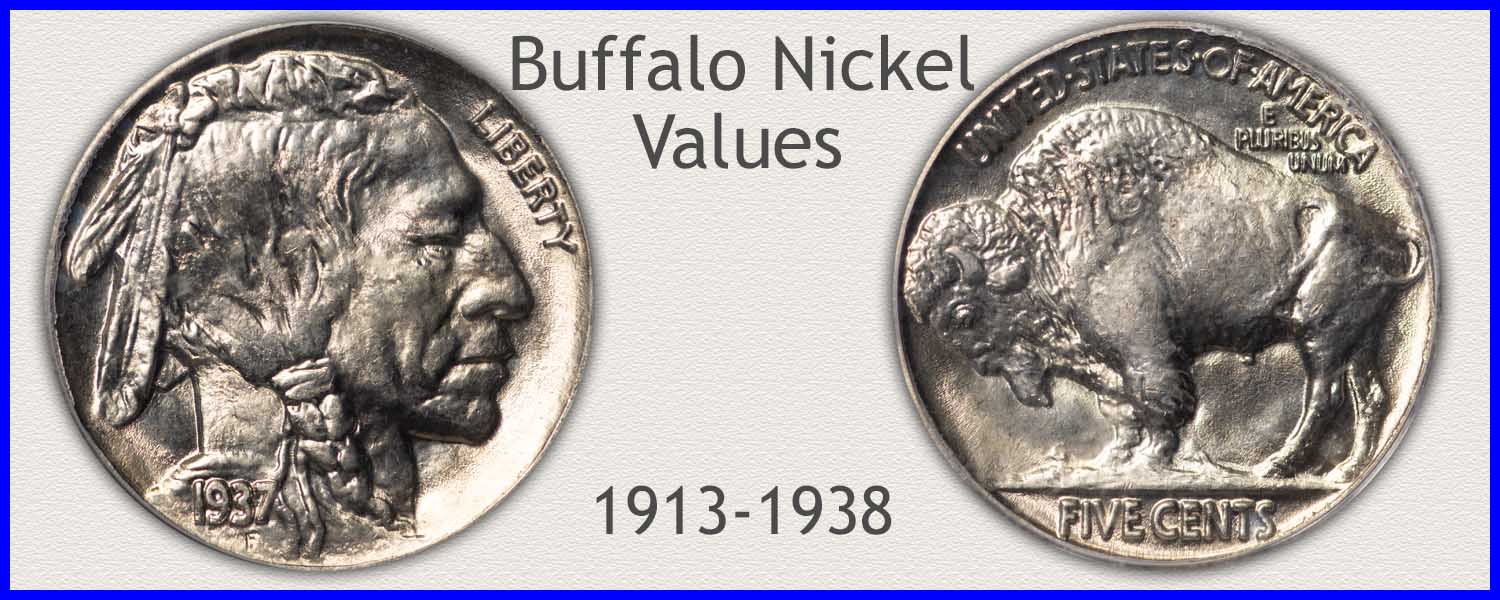
Buffalo Nickel Value | Complete Listing
Buffalo nickels enjoy popularity and demand from collectors. Even coins without dates have a premium value. Today, collectors closely examine Buffalo nickels, looking for special dates and higher condition examples. Often large value differences are found in just a minor improvement in how well the coin is preserved. This collector preference creates demand, showing in strong values on the complete value chart. Follow the steps to correctly identify and judge your old nickels.
Print the Coin Values Worksheet
Printable sheet to list and inventory your coins. Record your entire collection of coins keeping an organized listing.
Popular Coin Series | Solid Value Buffalo Nickels
With a swing in popularity, collecting Buffalo Nickels has upward potential. Charts illustrate popularity rankings of coin collections using registry set data. Dollar series, Morgan, Peace, and Presidential dollar sets are among the favorites today. The Buffalo nickel series is an area of collecting with overall scarcity and potential.
Rare nickels, for example, ones with double mint marks, occasionally "hide" in your box of old coins. Interestingly, some are still found in circulation today. The reason is most require a magnifying glass to discover. In this case the smallest of details makes for a valuable coin.
Selling Coins | How to Get the Best Value
Selling coins follows a defined method. Organize and research the value of the coin. Secondly, research for a dealer with an interest in the coin. Reference the selling guide and refer to listings of dealers to contact.
★Coin Values Discovery... finds 1927 nickel value and...
Value charts in combination with grading images to judge condition discover how much your old coins are worth. Get the best price if selling by knowing the accurate value of your coins.