Coin Values Moving with Precious Metals: Up-Dated 10/5/2026: Gold $4131 | Silver $60.80
1931 Nickel Value
Collector demand and low mintage numbers combine to support premium 1931 nickel value. This year saw only one mint producing Buffalo nickels and in very low numbers. Verifying the date, even if semi-clear, becomes a key requirement. Proceed with the evaluation method confirming this coin's date and state of preservation.
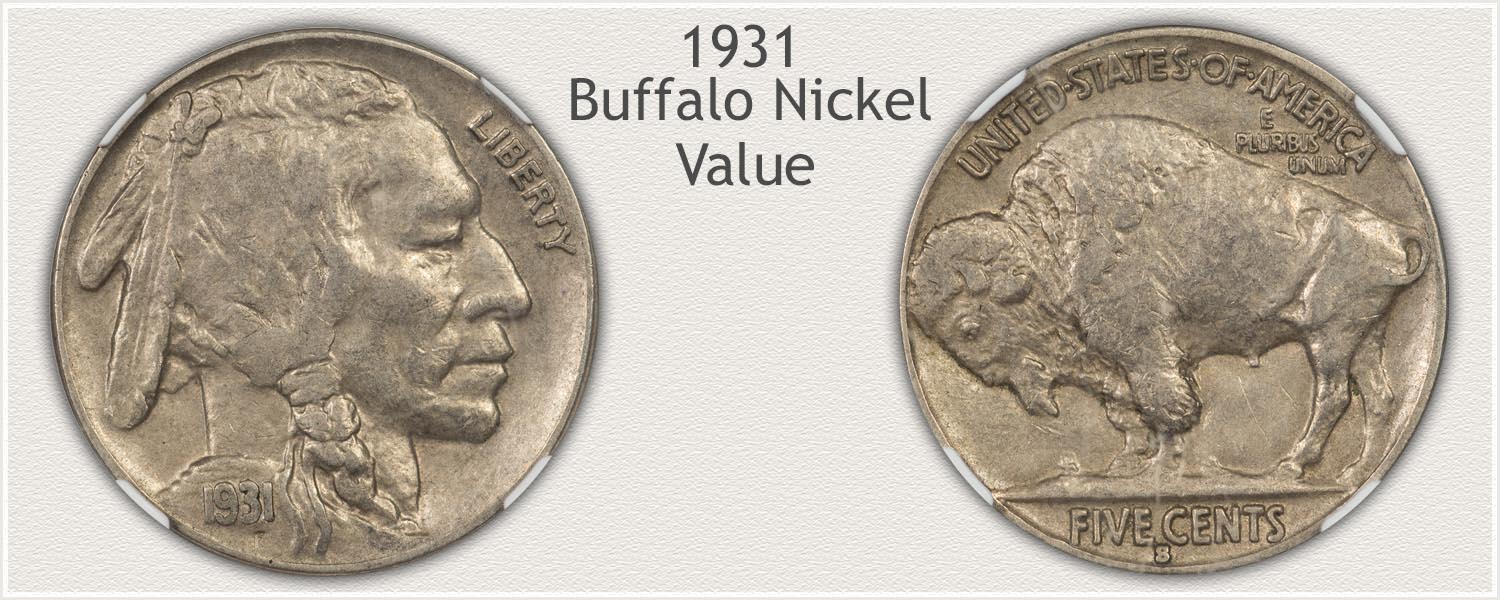 (fig. 1) Using Both Obverse and Reverse Views Identify the 1931 Buffalo Nickel
| 1931 Nickel Value | ||||
|---|---|---|---|---|
| Condition of Coin | ||||
| Date | Good | Fine | Extremely Fine |
Mint State |
| 1931 Nickel Value Updated | 2026 | |||
| 1931 S | $9 | $12 | $27 | $79 |
Refer to the chart as a range of wholesale values. Importantly, subtle qualities influence values within each grade category.
Steps Leading to Value:
- Step 1: Date and Mint Variety Identified: Using lighting techniques, inspect and confirm the date,
- Step 2: Grading Condition: Determine a "grade" of this premium nickel's condition by comparing it to images. Find a close match with images of example coins.
- Step 3: Special Qualities: Insights into demand show the solid base supporting values of this coin.
Step 1: | Date Plus Mintmark | The Elusive 1931 Buffalo Nickel
Noticeable on the above chart is the single issue of the 1931 nickel. This one variety of nickel for the year places a heavy demand on the coin. Take an extra moment and verify the date. Look to the shoulder area of the Indian's portrait. Often faded from wear, confirm this first necessary fact to identify the coin. If unsure of the date, use a standard technique described below.
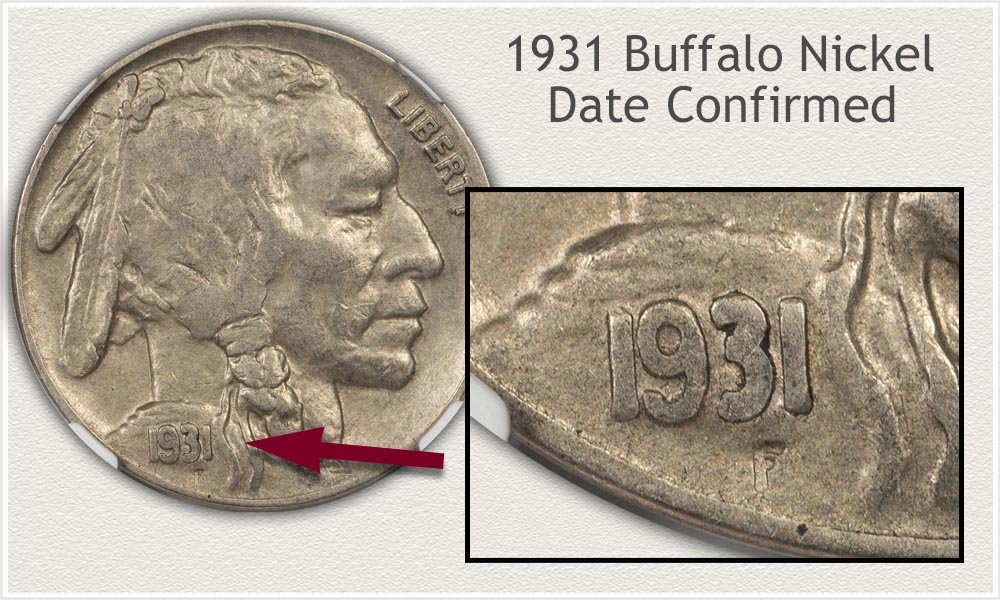 (fig. 2) Date Location and Close View of a 1931 Buffalo Nickel
How to Recognize the Partial Date Buffalo Nickel
Collectors often encounter Buffalo nickels with faded, partial dates. Without an accurate reading of the coin's date, it becomes impossible to value the coin or place it within a collection. Unfortunately, the date near the rim, a high relief area of the shoulder, wears quickly. Numerals reduce in height, eventually merging into the background.
Solving the partial, unclear date problem relies on specific lighting and magnification of the area. Viewing the coin under a single light has the greatest effect when detecting subtle features of a heavily worn date. Tilt the coin's surface at different angles toward the light. Low angles allow the light to cast strong shadows across the surface. Then rotate the coin; this often highlights faint edges. View the following image (fig. 3) pointing to numeral features and locations.
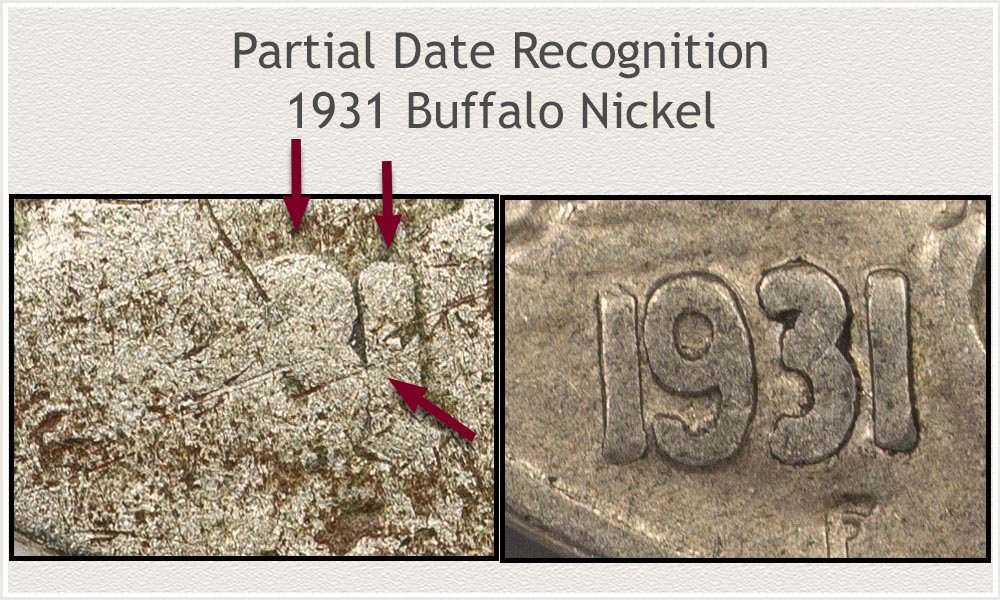 (fig. 3) Highlighted Features Help Recognize a Partial Date 1931 Buffalo Nickel
Because all Buffalo nickel dates begin with a one and nine, focus on the last two numbers in the date area. In the example image, the one and nine have completely faded. Only a small raised mound shows their location.
Looking closely, a rounded top of the "3" slightly appears next to the mound representing the nine. Compare the clear date image to help locate the "3." Importantly the right side of the "3" curves inward and then down, forming the small triangle. This double curving right side becomes the distinctive feature indicating the "3." Note the rounded curve of the number.
The "1," the last digit of the date, shows a narrow top when compared to the "3." A specific feature of the "1," its left side forms a straight vertical line next to the "3." Notice a narrow lower end to the number and the slight remaining detail of its straight vertical right side.
All combined these visible features lead to an accurate reading and identifying the collectible 1931 nickel.
The S Mintmark on 1931 Buffalo Nickels
The appeal of a 1931 nickel spans a wide collector range. 1931 nickels were struck only at the San Francisco mint and in low quantities. Its listing on the chart shows the "S" after the date indicating the mint. This "S" represents the mintmark placed on the reverse of the coin.
San Francisco is a branch mint producing coinage for the Western U.S. As required, the mint placed a small letter "S" on all its nickel coinage in the series. Locate the letter mark near the lower reverse rim just below FIVE CENTS. A special coin of the series and important to record accurately.
The Low Mintage "S" Mintmark Nickel
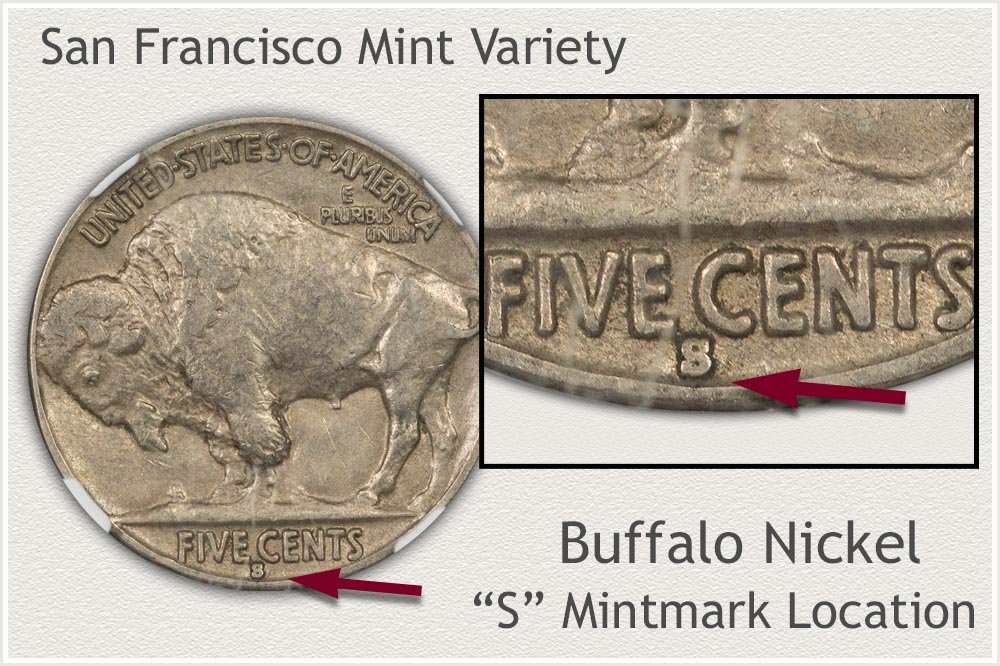 (fig. 4) Locate and Confirm the S Mintmark on a 1931 Buffalo Nickel
For two reasons, 1931-S nickels remain in high demand. First, it is the only variety representing the year in the Buffalo series. This alone adds a scarcity factor. Most years three mints struck nickels, providing millions of coins for the year. Second, its low 1,200,000 mintage number. At the end of minting Buffalo nickels, the 1931 date became the second lowest mintage of the series. These facts combine to draw the attention of all collectors.
When identifying the 1931 date, expect to discover the "S" mintmark on the reverse. Confirm and record a special Buffalo nickel.
Noting the steady rise in value depending on the coin's condition, grading in Step-2 becomes the next important factor.
Step 2: | Judge Condition and Identify Grade
A required part of the value process narrows the condition of the coin into a "grade." Using the images below, find a close match with your coin. Considered scarce, the 1931 nickel shows strong premiums in all levels of preservation. Determining its "grade" further refines its full description and listing on value charts.
Using a set of standards and matching the condition of the coin, identifies its grade. Reference the images and descriptions. These highlight key features and visible detail defining each grade. This comparison grading method narrows the coin's condition range. Magnify the coin under a single light. A close view and strong shadows often bring out subtle detail.
Mint State Grade
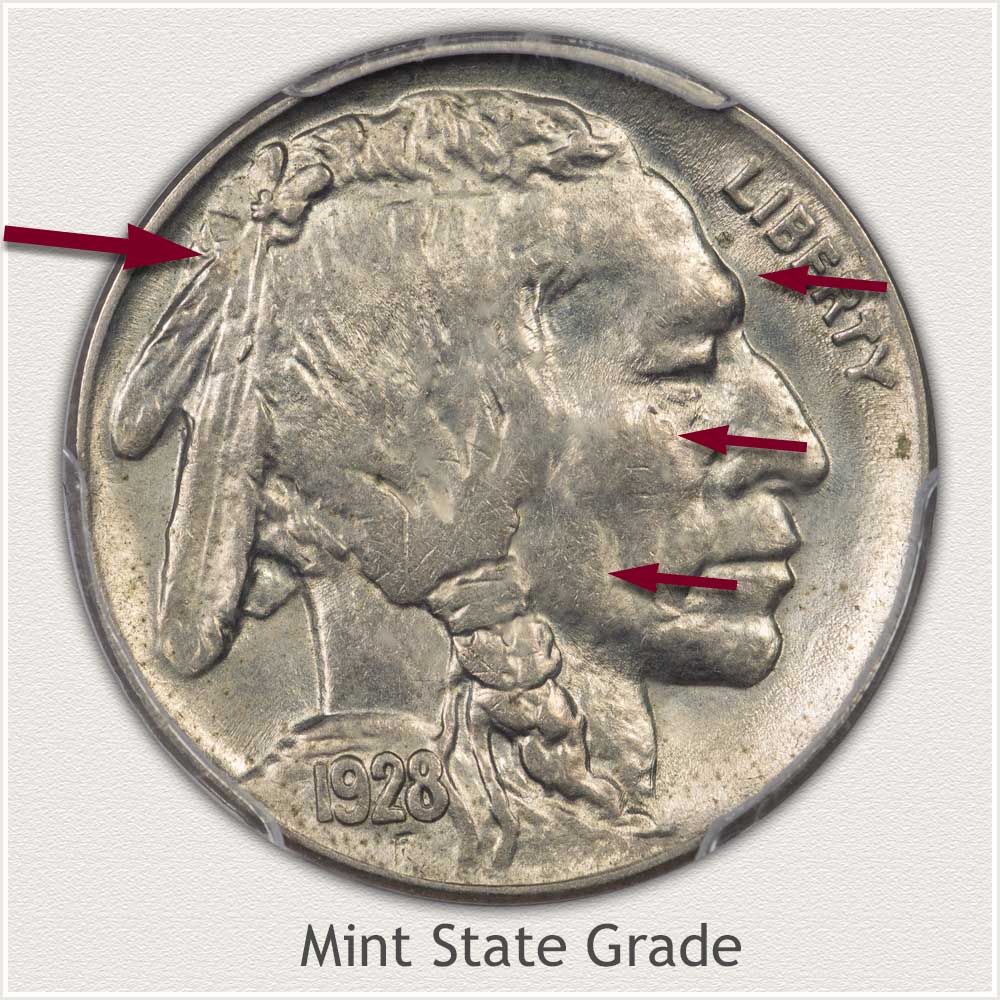 (fig. 5) Specific Grading Features Highlighted on a Mint State Grade Buffalo Nickel
A surface without wear becomes the deciding factor when grading a Mint State Buffalo nickel. No Wear on the surface defines this top-quality condition. Highlighted features point to specific areas to focus your examination.
Indications of a Mint State surface. First, high points of the design remain with the original metal texture. The minting process imparts a fine grain texture to the surface of the coin. Light reflects from this textured surface, displaying luster and brilliance. Any smoothing from wear lessens the reflective quality dulling the surface and shine.
Comparing your coin, examine the two feathers on the graded example. Illustrated (fig. 5) high edges of the feathers display a similar luster as the interior of the feathers. Additionally, the raised central shaft remains with luster across its top contour. These areas lack the smoothing and flattening caused by wear.
Smoothing and flat surfaces indicate wear. Secondly, compare your coin with the high areas of the Indian's facial features. The example displays a similar metal texture and shine on high points matching lower relief areas. Tilt your coin under a single light, look for this similarity of metal across high and low points. Typical grading features, the eyebrow, cheek, and jaw near the hair, need to show a similar quality matching low relief areas nearby. Wear on high points appears dull and smooth. Note the different colors displayed in the image. The effect is due to the reflection angle. When changing the light angle, reflections and contrast move across the surface. This is an excellent technique to verify the difference between a Mint State surface and wear.
Confirm on your coin, complete luster and texture and lack of dulling and smoothness on the surface.
Extremely Fine Grade
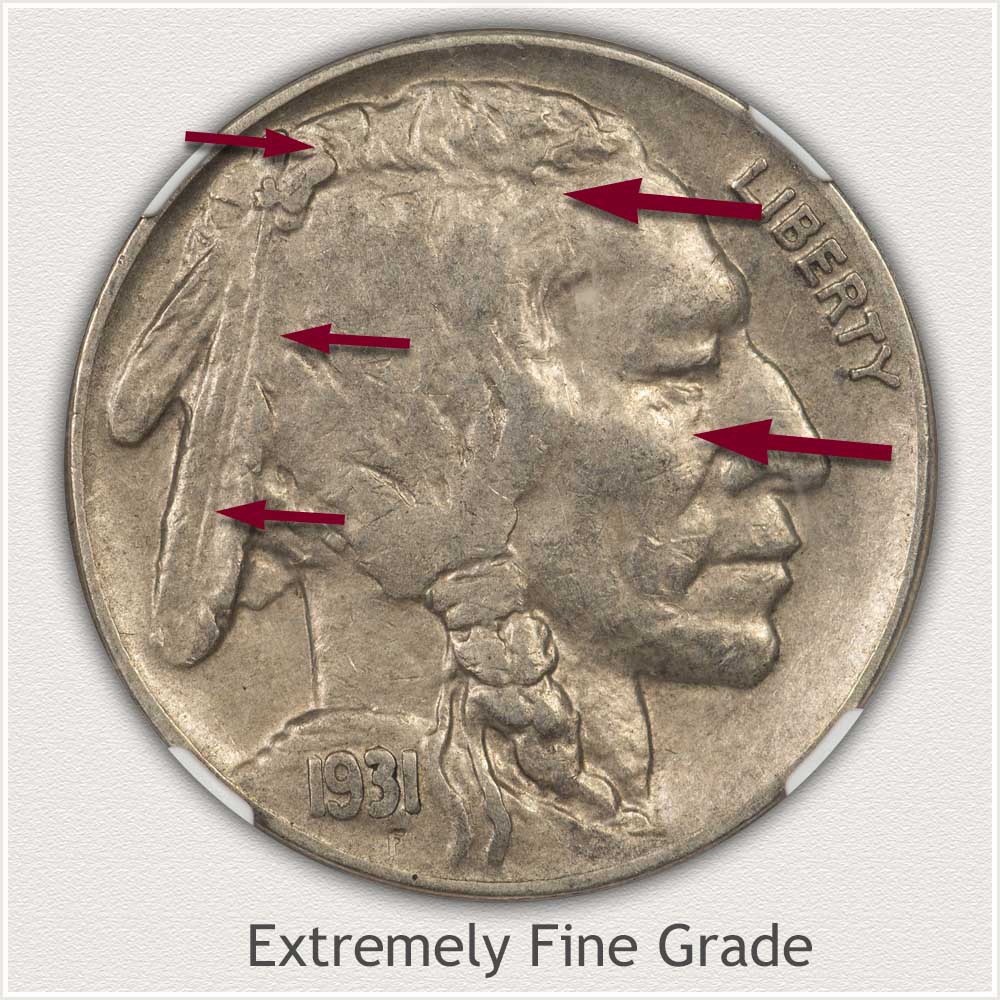 (fig. 6) Compare Condition of Highlighted Features on an Extremely Fine Grade Buffalo Nickel
Because most original details remain visible on high quality coins, they attract collectors' attention. Light wear only on high points, leaving details sharp and clearly defined, describes the Extremely Fine grade. Using the definition of "light wear" examine and compare your coin with the example (fig. 6).
Begin with an inspection of the visible hair detail at the top of the Indian's head. Notice in the illustration, some strands of hair remain along the lower edge of the part line. These fade slightly lower down into a smooth area. Above the part line, most strands and waves of hair remain, showing strong detail. Importantly, above the part line, none of the high points merge into larger worn and flat zones.
With a focus on the two feathers, notice the edges defining the feathers remain raised above the hair. Scanning along the right side of the large feather, a distinct raised contour separates the feather from hair detail. Wear reduces the high edge of the feather just slightly. Also, the center of the feather clearly recesses, leaving a strong center shaft. This shaft must extend from the bow at the top to the feather end. These small details indicate only a small amount of wear meeting grade level standards.
Next examine the high contour cheek area. This high point of the Indian's face shows only a small flattened area. As a grading metric, flat metal on the cheek remains separated from the hair contour to its left. A strong separation indicates a lightly worn Buffalo nickel. Overall condition of these combined areas points to a collector quality coin.
Fine Grade
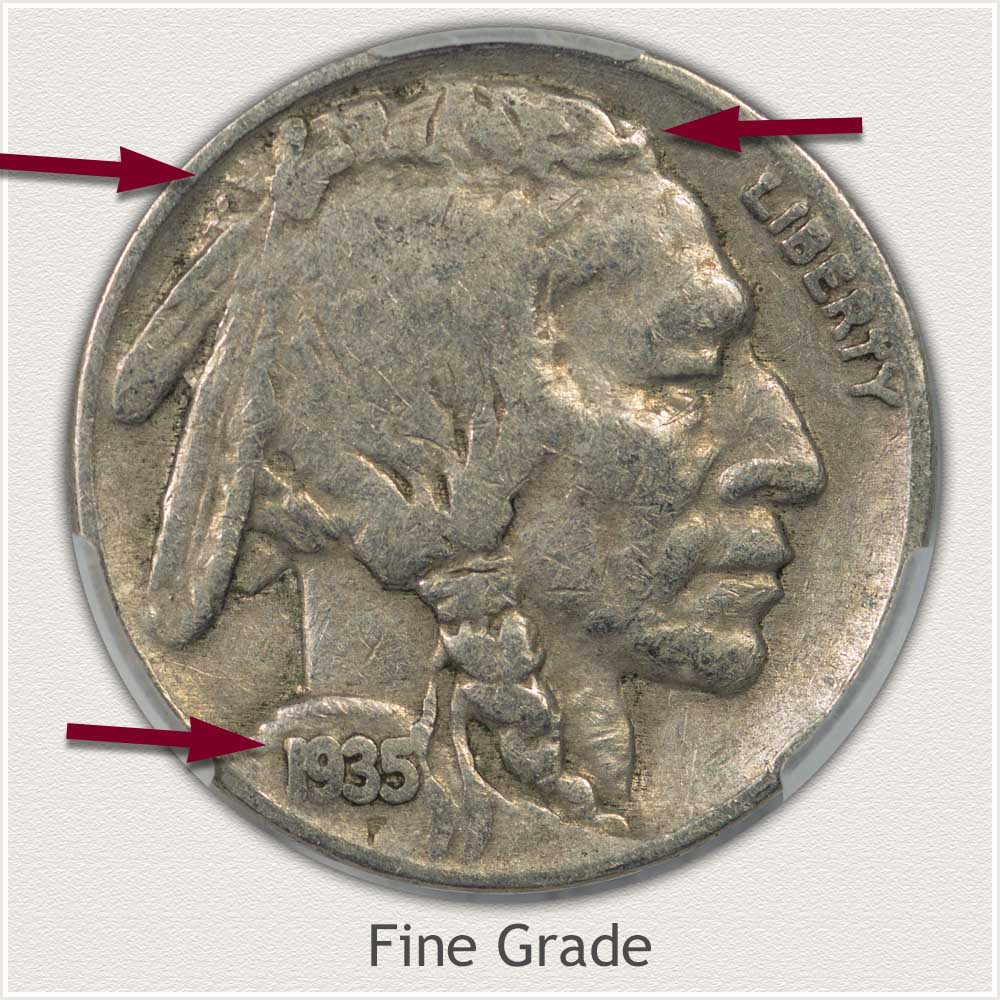 (fig. 7) A Match to the Highlighted Features Identifies a Fine Grade Buffalo Nickel
A coin showing distinct areas of detail mixed with visible areas of wear describes a Fine grade Buffalo nickel. Applying a set of standards to these visible details "grades" the coin's condition. Two major features display remaining detail in a measurable way.
The Date: As a first focal point, examine the clarity of the date on the example image (fig. 7). Each number remains clearly outlined. The top surface of each number shows flatness from wear, but their edges do not fade into the lower shoulder area. This completeness of each number's outline meets the Fine grade level of condition.
Next, the hair at the top of the Indian's head: Looking just above the part line, scan both your coin and the example in this area. Specifically recognize the presence of many deep recesses defining hair strands. Although wear smooths and flattens the tops of contours, few flat areas connect. This distinct separation of flattened strands, with bold recesses still remaining, displays the moderate wear level.
With the many high relief features on the face, plus clear date numerals, gives the coin a pleasing appearance. Combined with visible hair details, this quality enters the above average condition range.
Good Grade
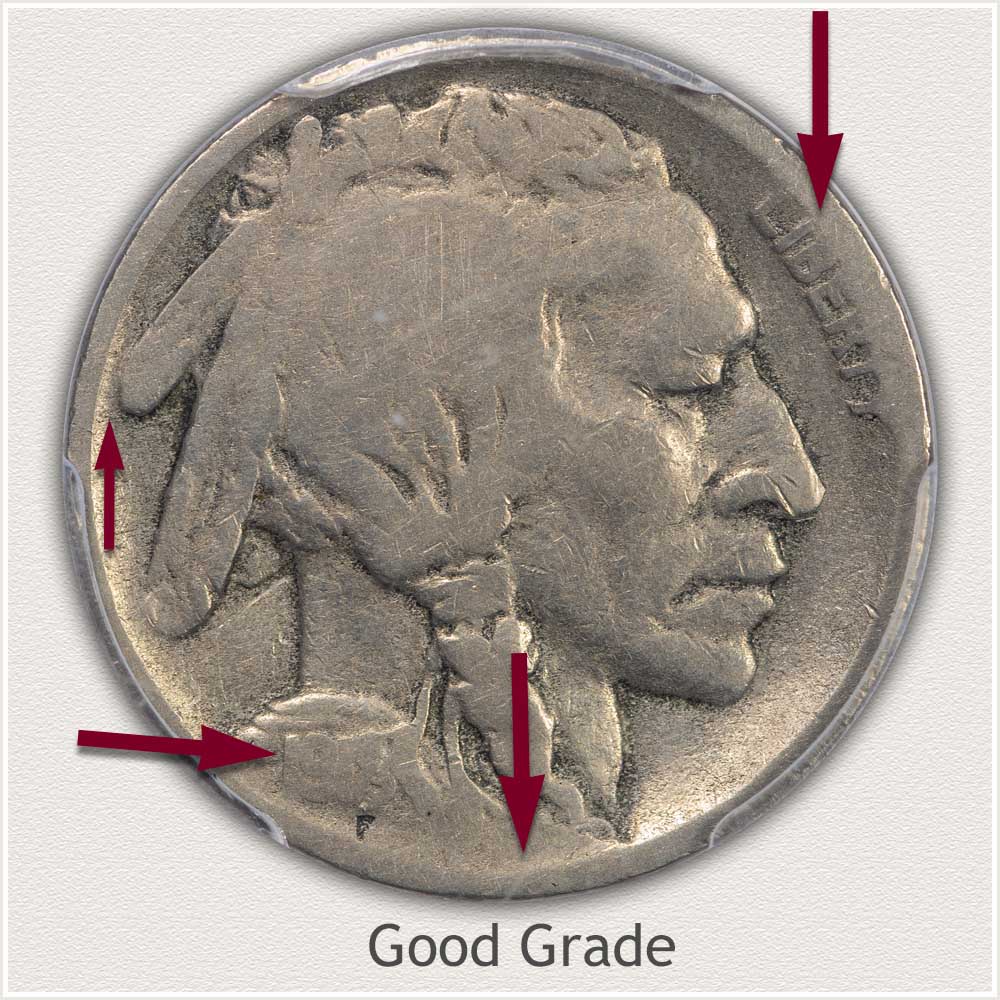 (fig. 8) Identify Condition of Highlighted Features to Determine a Good Grade Buffalo Nickel
A 1931 nickel enjoys demand as a collectible in all stages of wear. With "heavy wear" as its overall visual impression, note a few design elements remain. The grading inspection draws a focus on clarity of the date, completeness of the rim, and a subtle feather detail. A general description of a mostly smooth surface defines this Good grade condition.
As a grading feature, the date on the example is an excellent area to compare with your coin. Faded digits describe the date's clarity. A close examine is necessary to determine an accurate reading of the date. Finally, only parts of the numbers remain. This accumulation of detail both confirms the grade and limits it to the Good grade level.
Condition of the rim adds boldness to the design and a defining grading feature. On the example, note the inner edge shows a clear line along most of its length. Visibility of the inner edge fades where it connects with the Indian's shoulder and Motto. Although edge detail is somewhat clear at the shoulder, the rim distinctly merges with letters of the Motto. These two features clearly help identify the heavy wear level.
Next, find the subtle feather detail where the smaller feather nears the rim. In Good grade condition, a clear separation remains between the feather and rim. An outline of the feather end and the inner edge of the rim do not meet or begin to merge.
Three distinct grading features when visible confirm this collectible quality Buffalo Nickel.
How to Video: Grading Buffalo Nickels
1931, a premium Buffalo nickel, requires an accurate judgment of condition to value correctly. Additional grading images and descriptions continue the comparison grading method.
Grading Buffalo Nickels | Visual Grading Guides
Step 3: | Special Qualities | Details of a Special Year
Why a 1931-S Nickel is so Valuable
The Buffalo nickel series minted, 1913 to 1938, contains a wide variety of interesting years. Many variables show just within the amounts of coins struck and numbers of different mints producing the coins. As an example, in its first year 1913, the mints released a total of six different issues into circulation. Many other years have three different issues representing the various mints involved. Along with its bold design, these different factors make the collecting of the series both enjoyable and challenging to collectors.
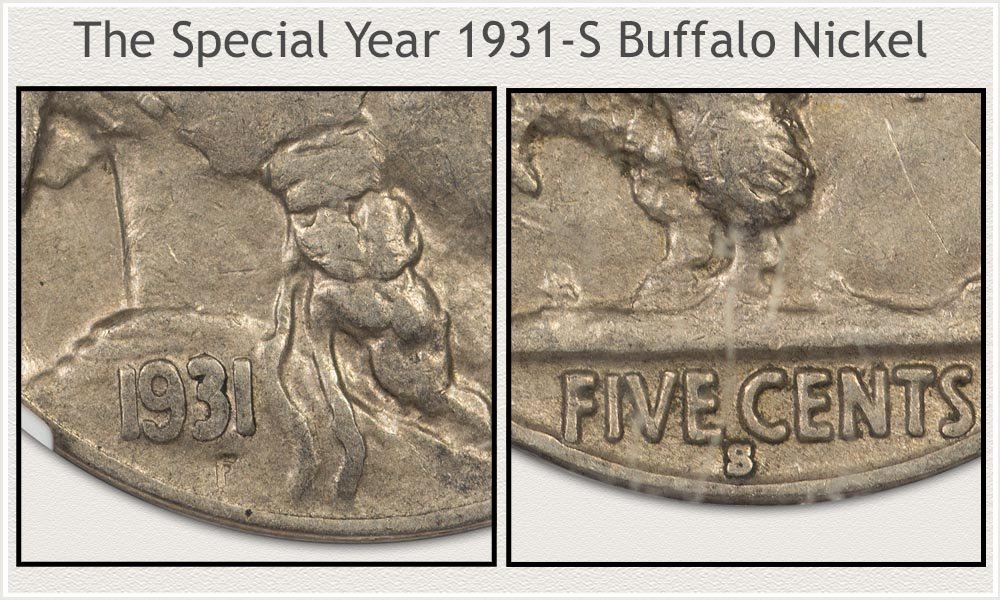 (fig. 9) A 1931-S Special Year of the Buffalo Series
1931-S nickels standout as the only collectible issue representing the year. Not quite unique for the series, the 1938-D nickel also represents a one variety issue year. There is however, an important difference between the two years. Production numbers of 1931 nickels are significantly lower than 1938 nickels. This shows in the large value difference of the two. Surviving numbers of the 1931 nickels meet a strong demand that raises their premiums.
The different ways the Buffalo series is collected also provide a steady demand for 1931 nickels. As a popular series, collections take many forms.
- High quality collections. These feature coins in top condition ranges.
- A set of each date and mint collection. All the different issues of date and mint combinations.
- A year set. This collection focuses on one example of each year a Buffalo nickel was minted.
Additionally, many other themes and subset collections engage collectors. Rarity only collections of low mintage and scarce coins, as example. Helping support values, all these collections require a 1931-S nickel.
1931 nickel value remains strong and stable, the result of being a popular elusive date within a very popular series. A coin with strong appeal to all, from beginner to advanced collectors.
Key value fundamentals of date, mint, and condition all combine adding to 1931 nickel premiums. Additionally, links below lead to the full Buffalo value chart and expanded grading guides of the series. Continue with what's next.
References
U.S. Mint. (1932) Annual Report of the Director of the Mint Fiscal Year 1932. United States Government Printing Office.
The Bureau of the Mint. (1928) Catalogue of Coins of the United States. United States Government Printing Office.
🔎What's next: Review the articles helping decide how to Keep, Store, or Sell this important Buffalo nickel.
Coin Values | CoinStudy Articles
Date by Date
In Depth Buffalo Nickel Value
1913 to 1938
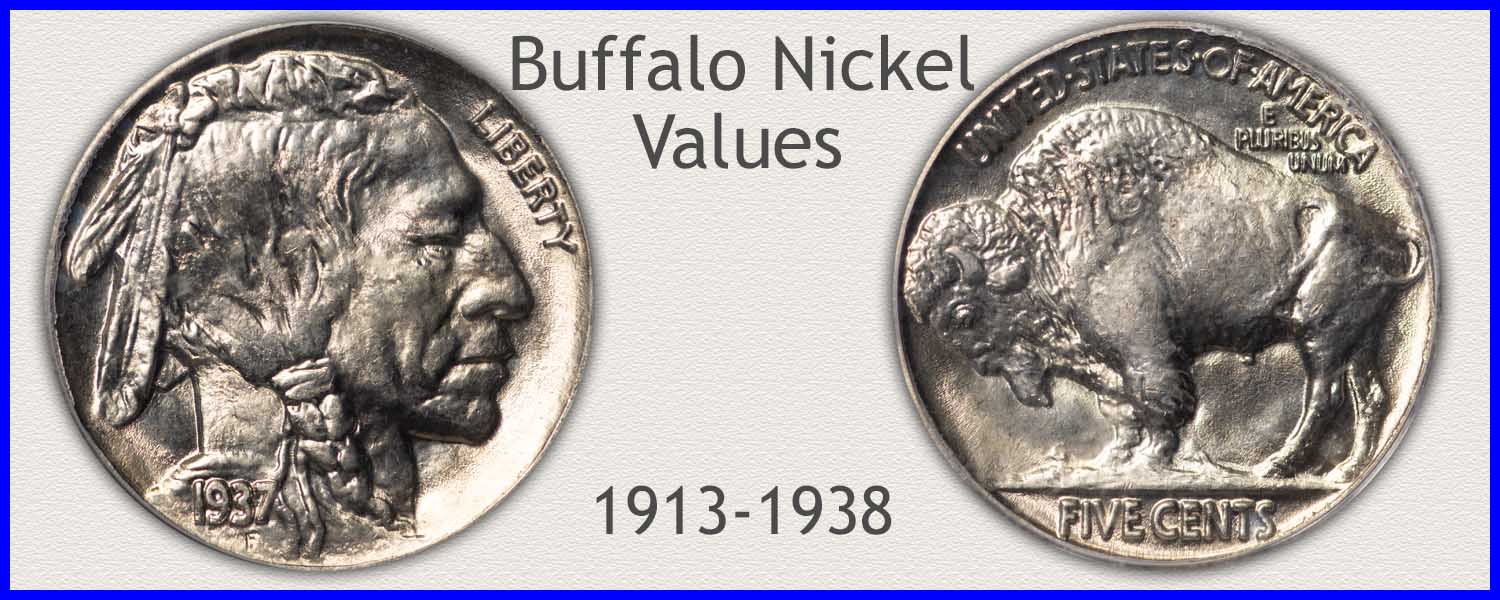
Buffalo Nickel Value | Chart Plus - Steps to Identify Each Coin
Review the complete value chart. All dates and mints of the series listed, each valued by different condition levels. Interest in Buffalo nickels by collectors and the market support premium worth. With a step-by-step process, recognize how much all Buffalo nickels are worth.
Print the Coin Values Worksheet
Print the Coin Values Worksheet to list your coins and record their values. Add comments and keep as a written copy of the entire collection.
Safe Coin Storage | Recommendations
Storing your coins correctly preserves value. Single high value coins need protection from elements in the air and contact to their surface. Large quantities of coins are conveniently housed in special holders. Safe methods are explored.
Selling Coins | How to Get the Best Value
Steps to take when selling coins. Examine and value your coins accurately. Research dealers to contact. Use the method collectors follow when it's time to sell your coins.
Popular Coin Series | Solid Value Buffalo Nickels
Coin series enjoy different levels of popularity within the hobby. Buffalo nickels are avidly collected and pursued. Values are directly related to their interest by collectors. Knowing a coin is in demand by many is an understanding of your coins.
★Coin Values Discovery... finds 1931 nickel value and...
An image guide highlights details about important features on old coins. Using both descriptions and images, identify dates and mint varieties, condition of the coin, and special qualities. A step-by-step process discovers how much a box of old coins is worth.